Schools and sports programs run on depend on. Moms and dads hand over their children expecting they will certainly be tested, sustained, and safe. A lot of days that depend on is well positioned. After that a child breaks down on the sideline, a trainee has a serious allergic reaction in the lunchroom, or a preschool class explores a container of switches with curious fingers. The minute changes, and training comes to be the distinction between panic and calm activity. This is why first aid and CPR training belongs at the center of expert prep work for teachers and coaches, not on the margins.
I have worked together with educators, athletic supervisors, and club volunteers enough time to have seen the range, from completely handled emergencies to uncomfortable could‑have‑beens. The throughline is straightforward: individuals that have taken a solid first aid course, exercised their CPR, and maintained their skills existing have a tendency to act faster and better when minutes issue. That self-confidence is infectious. It steadies teams, guarantees family members, and, sometimes, conserves lives.
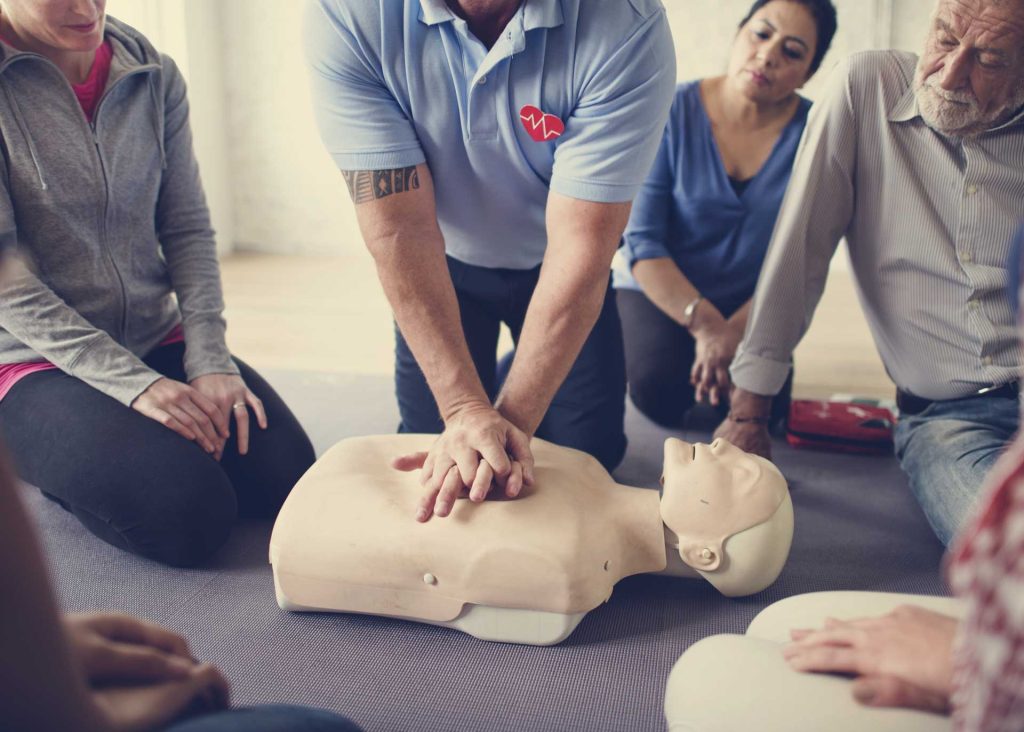
What adjustments when team are trained
Training hones perception. Prior to I completed my first thorough first aid and CPR course, I undervalued exactly how quickly a scene might advance. A senior high school gamer clip-tackled from behind looked rattled yet fine, after that mins later on was confused, irritable, and nauseated. An experienced assistant trainer picked up on the warnings for trauma, drew the professional athlete instantly, and walked me with an easy, structured evaluation. That athlete's parents still thank her. Knowledge transforms obscure worry right into a series of clear actions.
Training additionally integrates teams. In a well-drilled school, the front office knows who grabs the AED, the instructor delegates crowd control, the teacher calls emergency solutions with the precise location and entry point for paramedics, and the first aid package turns up stocked and functional. It is not magic. It is muscular tissue memory integrated in cpr training and first aid courses that imitate the noise and stress of actual incidents.
Finally, training sets norms. When brand-new staff see that a first aid certificate is expected, that cpr refresher course days survive the common calendar, which drills are treated seriously, they adjust. Safety and security culture ends up being a daily habit as opposed to a compliance box.
The actual emergencies schools and groups face
Not every emergency is a remarkable collapse with an AED sprint. The pattern in education is a churn of smaller problems stressed by rare yet high‑stakes events. A smart first aid and cpr course prepares for both.
The usual situations show up in every term. Nosebleeds that will certainly not stop after five mins of pressure. Sprained ankles from errors on stairs or lawn. Finger lacerations from a woodworking course. stings that swell ominously. Hyperventilation after a panic attack. Bronchial asthma flares during warm‑ups when the inhaler was failed to remember. Head knocks that initially appearance benign. Dehydration and warmth pains during early‑season methods. These are hardly ever newsworthy, yet they eat time and focus. With training, an educator or train relocations quickly with main studies, uses clean injury care, checks vitals, and papers the case. Without training, the very same occasions waterfall into uncontrolled scenes, moms and dads hired a rush, and youngsters entrusted preventable complications.
Then there are the low-frequency, high-impact scenarios. Cardiac arrest in young people is uncommon, however it takes place, frequently pertaining to undiagnosed problems or an unexpected commotio cordis after a blow to the upper body. Prompt CPR paired with early defibrillation can triple survival prices. Serious anaphylaxis after a food exposure is extra widespread than a lot of team anticipate, and mins count prior to an air passage tightens. Back injuries in contact sporting activities are rare, yet messing up a downed professional athlete with neck discomfort has destructive potential. Diabetic emergencies, seizures, and warmth stroke round out the checklist. A thoughtful cpr course and first aid training do not simply show techniques. They instruct sequencing and restriction, how to do simply enough and avoid unsafe improvisation.
What robust training actually covers
Good carriers do not sink you in jargon. They develop a sensible toolkit. The best first aid and cpr courses share typical functions also if the labels differ by nation or accrediting body.
- A straightforward technique to scene safety and primary evaluation that becomes second nature. Examine responsiveness, phone call for assistance, open up the airway, look, listen, and feel. You exercise until it really feels practically dull, due to the fact that uniformity under anxiety is what you want. Core CPR skills for adults, children, and babies, including single‑rescuer and group methods, with feedback tools that deal with price and deepness. You learn when to make use of an obstacle device, exactly how to switch compressors without losing rhythm, and just how to incorporate an AED within seconds. Management of choking in all age. You drill abdominal thrusts, back blows for infants, and the change from obstruction to unresponsiveness without missing beats. First help for blood loss, including direct stress, dressings, and tourniquet usage. Lots of institutions still shy away from tourniquets. Modern support sustains them when extreme bleeding will not stop with pressure. Team need hands‑on method to construct comfort. Recognition and take care of head, neck, and spinal column injuries. You practice verbal stabilization commands and safe roll strategies for breathing analysis when essential, while learning when not to relocate someone. Medical emergency situations more than likely in schools: asthma, anaphylaxis, diabetic issues, seizures, fainting, and warm disease. You find out to use epinephrine auto‑injectors correctly, acknowledge hypoglycemia versus hyperglycemia in functional terms, and handle post‑ictal pupils with dignity and safety. Injury administration basics: strains, pressures, cracks, oral injury, eye injuries, and burns. You practice splinting with products you actually carry website, not simply optimal gear from a training room. Communication and documentation. That calls whom, what to say to dispatch, what times to note, how to hand off to EMS concisely.
Courses differ in size and focus. A regular blended first aid and cpr course runs 4 to six hours, with pre‑learning completed online. A lot more intensive qualifications for trainers can run a complete day. The secret is time on job. 10 minutes of breast compressions with real feedback educates greater than an hour of lecture.
Why instructors and trainers require a tailored lens
Students are not little grownups. The physiology, the psychology, and the context are various. Teachers and trains likewise have special restrictions: course proportions, multiple synchronised obligations, and a responsibility of treatment spread throughout rooms as differed as science laboratories, play grounds, buses, and away game venues.
In primary settings, choking tops the risk checklist, followed by play area injuries and mild head trauma. Teachers need an eye for refined warning signs of degeneration: a kid who withdraws, experiences "stomach pain," or wanders to rest after a head bump. In top qualities and sports, the account shifts to musculoskeletal injuries, concussions, heat disease, and periodic heart or respiratory emergency situations. Instructors need to juggle professional athlete treatment with game administration, crowd behavior, and the logistics of big fields or gyms where feedback time varies by where the AED hangs.
A basic first aid course may skim these subtleties. Programs constructed for teachers and trainers attend to the edge situations: exactly how to manage a downed professional athlete when challengers maintain warming up close by, exactly how to maintain bystanders from crowding a pupil in distress without rising stress, or just how to coordinate with an institution registered nurse when she is covering several buildings.
The AED question that keeps coming up
An automated external defibrillator is just beneficial if 2 problems are met. It needs to be physically easily accessible within a brief stroll, and team has to agree to utilize it. I have checked out colleges with AEDs locked in the front office, a vacant corridor a hundred meters from the sports fields. One min of delay for retrieval, one min to jog back, half a min to open the situation and use pads, and you have actually already burned priceless time. The objective several districts take on is a two‑to‑three‑minute total time from collapse to very first shock if suggested. Rehearsing that sprint matters.
AEDs do not call for sophisticated accreditation to operate, but confidence makes deployment quicker. A great cpr training module consists of repeatings with the precise version your college owns, due to the fact that the pad placement representations, voice triggers, and button design vary. Individuals freeze less when the tool feels familiar. Personnel additionally require to recognize that AEDs assess heart rhythms and will not surprise an individual with a typical heartbeat, which counters a consistent concern of doing harm.
Legal and plan angles managers need to weigh
Policy choices shape end results more than posters on wall surfaces. Some jurisdictions mandate first aid and cpr courses for instructors and trainers, others leave it to districts. Despite the law, the liability danger does not vanish with ignorance. The more secure footing depends on recorded training, clear treatments, and equipment maintenance logs.
Good Samaritan securities typically cover lay -responders that act in excellent faith and within their training. The phrase within their training matters. Completing an identified first aid and cpr course, keeping a valid first aid certificate, and adhering to taught protocols enhance that lawful shield. Alternatively, ad‑hoc practices that contradict advice, like offering medications not suggested or relocating a thought spinal injury without cause, can erode it.
Administrators ought to also set refresh cycles that mirror ability degeneration. Research study recommends CPR performance degrades in as little as six months without practice. Annual refresher courses for vital employees, supplemented by short, quarterly skill run‑throughs, healthy school calendars better than waiting 2 or three years. The cpr correspondence course does not require to be a marathon. Half an hour with a manikin and AED instructor makes a quantifiable difference.
Building a realistic training plan for an institution year
Bringing everybody to a full‑day session yearly is excellent and frequently not practical. Timetables, alternatives, and budget plans fight back. The workable strategy mixes deepness and frequency.
Core personnel should have full certification with a first aid and cpr course: front office, institution nurse, principals and assistant principals, PE team, and all head trainers. Most programs can certify this associate just before the year starts, with an alternative to get laggers mid‑term. Classroom educators benefit from the exact same qualification, however if resources are limited, begin with those supervising higher‑risk activities: scientific research laboratories, technology workshops, excursion leads, and recess monitors.
Then layer in micro‑drills. Five mins at a staff meeting to exercise the emergency situation address script for calling send off. A brief after‑practice session where the team supervisors practice recovering and triggering the AED. Circumstance cards in instructors' binders that punctual quick run‑throughs: a professional athlete collapses on the far end of the area, the bus driver radios a trainee confiscating in the back row, a lunch task teacher lacks epinephrine after a 2nd exposure. Technique issues greater than excellent scripts, due to the fact that genuine scenes twist.
Finally, first aid course Oxley area track expirations and set condition as if they were attires and routines. AED pads and batteries expire on foreseeable cycles. First aid packages eat materials invisibly. Somebody should have the checklist and the schedule, and leadership needs to safeguard time for that work.
Working with a training company that recognizes schools
Not all providers are constructed for the education and sports context. When seeking first aid training, ask blunt inquiries. Will they tailor scenarios to student ages and school settings? Do they bring responses manikins that measure compression depth and price, or is it a passive session? Can they integrate your AED version into technique? Do they cover epinephrine auto‑injector usage and lawful factors to consider? How do they handle combined learning for personnel with minimal accessibility? Recommendations from nearby schools matter greater than marketing.
Some regions have developed companions like First Aid Pro and similar companies recognized for responsive organizing and practical sessions. What you desire is a cpr course that works on time, respects adult students, and leaves people a little tired in the arms from technique, not polished from slides. The much better classes https://travisoebs608.wpsuo.com/household-safety-and-security-plan-how-first-aid-training-fits-in build in small‑group turnings, turn duties, and leave room for questions that emerge the awkward realities instructors face, like being alone with 28 students while taking care of an emergency.

When finest practice meets the untidy facts of institution life
You can create an excellent emergency reaction intend on paper, then enjoy it collide with corridor congestion, a locked gateway, or an alternative instructor covering 2 courses. Real life calls for backup strategies and judgment.
Consider the traditional issue on a football pitch. A player goes down, stationary. The nearest instructor carries a first aid kit yet the AED is at the gym door. The assistant is dealing with warm‑ups at the much sideline. 2 parents are hovering, one claims she is a nurse. Training assists you sort the concerns. First, evaluate responsiveness and breathing. If the professional athlete is not taking a breath generally, send out the local qualified person for the AED and call emergency services with the field's specific gateway access point. Start CPR immediately. Delegate group control to the assistant or the most even‑keeled parent. If the declared nurse demands taking over, validate promptly and team up, not contend. Your task is not to own the scene, it is to ensure it moves.
Another edge situation stays in classrooms. A pupil with a well-known extreme allergic reaction begins coughing after a birthday celebration reward shows up. His epinephrine pen sits in the registered nurse's workplace. This is not a time for arguments regarding plan breaches. Trained staff follow the strategy: ask the trainee where his pen is if he can speak, advise a coworker to run, keep track of breathing, prepare to use a school supply if available and licensed, and call emergency situation services early. Documents can wait. The pulse of first aid is act, then explain.
Heat provides its very own puzzle. Early period conditioning brings athletes who run out shape and excited. Warmth ailment creeps, then strikes. Trains with great training acknowledge that a talkative professional athlete that stops sweating, looks pale, or complains of battering frustration may be going across right into heat fatigue or worse. The reaction is active air conditioning currently, not a gentle stroll to the storage locker room. Shade, get rid of excess gear, cool damp towels or ice to the neck, underarms, and groin, and cold fluids if the athlete looks out and can ingest. If there is any type of issue for warm stroke, you cool boldy and ask for transport. It is simple to underreact since the athlete is awake. Educating remedies that bias.
Equity and incorporation in emergency response
Not every trainee signals distress in the same way. Language barriers, neurodiversity, and social standards shape just how kids request aid and how grownups analyze actions. A trainee on the spectrum may not make eye call or could script language that sounds like defiance when they are terrified. A recently gotten here pupil may not have the vocabulary to explain chest tightness, instead aiming or utilizing an acquainted word that misleads. Educating that highlights these realities improves care.
Equipment choices should show inclusion too. Stock both grown-up and pediatric AED pads. Maintain inhaler spacers sized for tiny faces. Make sure epinephrine auto‑injectors include both junior and basic doses if your jurisdiction enables stock supplies. Instructors working with professional athletes that use hijabs or various other religious garments ought to practice considerate, efficient access to the breast for AED pad positioning while preserving self-respect, utilizing towels or teammates as displays when possible. You learn these touches from trainers that have been in the field, not from common slides.
The cycle of self-confidence: how refreshers keep abilities alive
After a large incident, everyone assures to stay existing. Six months later on, the information discolor. This is not an ethical failing, it is just how memory functions. Muscular tissue memory decays without usage. Refresher course technique, little and often, maintains competence.
The cpr refresher course does more than reset a certification. It corrects drift. Compressions slow down or speed up with time. Hands creep to the wrong placement. Breaths end up being reluctant. Short, focused sessions recalibrate. Pair them with micro‑scenarios customized to the season. Before springtime traveling, run a bus emergency drill. Before winter season concerts, technique crowd communication and AED retrieval course with packed corridors. Maintain rating: time from "collapse" to first compression, time to AED on breast. Post the times and enjoy them shrink over the year.
Documentation that actually helps
Forms can feel like bureaucracy, yet after‑action notes are gold if they are succinct and beneficial. Record time of case, key signs and symptoms, interventions performed, time of 911 telephone call, time of AED application if made use of, handoff details, and names of responders. Avoid narrative fluff. Catch any type of tools used that requires restocking. The point is two‑fold: to support continuity of treatment and to sustain truthful debriefs.
Debriefs should be brief and kind. What went well, what could transform, what devices or training voids showed. Park blame at the door. If the AED was difficult to find because a trophy table obstructed the closet, repair the format. If brand-new staff was reluctant to start compressions, arrange an extra cpr training touchpoint. Improvement is a loophole, not a verdict.
Costs, routines, and the value question
Budgets are actual. So is the value of preparedness. Direct costs for a first aid and cpr course vary by area and supplier, commonly varying from the low hundreds to the high hundreds per friend, with per‑person costs that go down for teams. Add the time expense of team hours. Devices maintenance prices consist of AED pads and batteries, epinephrine restocking where permitted, and renewing first aid products. For most colleges, the yearly investment for training and maintenance is a fraction of a single event's downstream expenses, both human and financial. Insurance costs, responsibility direct exposure, and area trust experience on these decisions.
Scheduling is the perennial barrier. Mix strategies. Usage in‑service days for group accreditation. Deal evening or weekend options with comp time. Run combined courses where the didactic portion happens online and in‑person time concentrates on abilities. Stagger sessions so every team contends least one completely certified member working whatsoever times.
What to do tomorrow morning
Even if a full program reconstruct takes weeks, there are actions you can take best away.
- Walk your university with fresh eyes. Time the path from each sporting activities venue and high‑traffic location to the local AED at a brisk but secure speed. If any course surpasses two minutes, flag it for moving or an additional unit. Open your first aid kits. Keep in mind ended items, empty pockets, and whether instructions are clear. Appoint a name and a date to restock, and put that day on a repeating calendar reminder. Run a two‑minute drill at the next staff conference. Call out a hypothetical collapse location, appoint duties aloud: customer, AED runner, scene lead, traffic control. Practice the dispatch address and access instructions. Check certificates. Develop or update a straightforward matrix of that holds a valid first aid certificate, that has actually finished a cpr course, and whose renewal day is coming. Do not bury this in a hard‑to‑find folder; share it with leads. Contact a credible carrier to arrange first aid courses and cpr training that fit your calendar, request school‑specific circumstances, and verify incorporation of AED practice with your model.
The state of mind that sustains risk-free programs
Training is a way to an end, not a trophy. The end is an institution or club where adults act without dithering, equipment functions when it should, and kids notice that the adults around them can take care of hard minutes. Educators and trainers currently carry much more weight than task summaries reveal. Adding first aid and cpr proficiency is not a concern, it is a force multiplier. It simplifies chaos, frees interest for teaching and training, and, on unusual days, keeps a heart beating until aid arrives.
The hardest part is the first investment. After that, energy builds. People that have actually exercised together trust fund each various other even more. Drills quit feeling awkward and start feeling like part of the craft. Moms and dads notice, and word spreads that your institution or program takes safety seriously rather than theatrically. When the inquiry develops about CPR Training Maitland whether a first aid course or cpr courses deserve the time, you can aim not just to plans or data, however to your own experience: that day on the area, in the lab, or in the lunchroom when training turned concern into action and activity right into a great ending.
The goal is not perfection. The objective is readiness. Take the course, renew the card, run the drill. Stack these straightforward acts. They amount to a program you are proud to lead, and a community that counts on you with what matters most.
